In fast-moving consumer goods, one factor is becoming increasingly decisive: time. A recent NielsenIQ study portrays a consumer who is often "time-crunched", assessing convenience not only by price, but also by the minutes saved across planning, preparation, and meal management. In this context, the convenience of food products is no longer an add-on - it becomes a core part of perceived value, provided it is not seen as an unjustified luxury.
Minutes as a new unit of value: demand exists (and can grow)
 The key takeaway is that a significant share of consumers is willing to pay more for practical solutions that save time: 33% say they are extremely (10%) or moderately (23%) willing to pay a premium for "time-saving" products. Another 35% decide case by case - a segment that can be won over when the benefit is clear and concrete. At the other end, 32% are barely willing or not willing at all to purchase these products.
This willingness comes at a time when time pressure is real: over the past 6 months, 39% of consumers say they have felt more time-crunched (27% "a bit more" and 12% "much more"). Just over half (53%) report no change, while 9% feel less under pressure. In short, the need is not uniform, but it is widespread enough to influence assortments and purchasing decisions.
Why do consumers pay for convenience?
The reasons consumers pay to save time vary by income. This matters because "convenient" on its own is not enough - the value message needs to match the audience.
-
For lower-income shoppers, time savings often link to urgency and reduced stress.
-
For middle-income shoppers, the priority is practical simplification (solutions that remove steps and simplify preparation).
-
For higher-income shoppers, the stronger driver is freed-up time to use elsewhere.
Willingness to pay for practicality is real, but not guaranteed. The same product can succeed (or not) depending on positioning and how it is presented.
To explore convenience food trends (ready-to-eat and ready-to-cook) in more depth, read also: "Convenience Food: Market Data, Growth, Global Trends, and Opportunities".
A delicate balance: promotion fatigue and rising prices
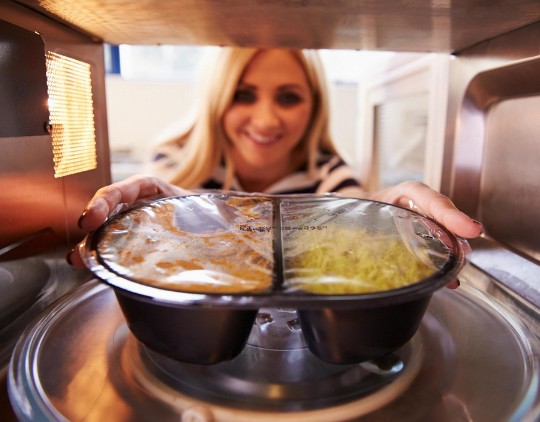 This is the most sensitive point: practicality works only if it remains credible on value. NielsenIQ highlights a delicate balance: many consumers are tired of constantly chasing promotions, while at the same time unit prices in some ready or semi-ready food categories are increasing.
Promotion fatigue is not marginal: 38% report a moderate or high level of fatigue linked to always searching for the lowest price (24% "moderately" and 14% "a lot"). Another 37% feel it "only a little", while 26% do not feel it. This creates a paradox: many people are tired of deal-hunting, yet they remain sensitive to any increase that makes practicality feel too expensive.
Convenience can justify a higher price, but only if the benefit stays obvious. When price rises faster than perceived value, the product stops being a smart choice and becomes an occasional treat.
Guidance for companies and operators
If time continues to be an increasingly limited resource in consumers' daily lives, producers and distributors need to translate this need into coherent assortment and communication decisions, focusing on a few operational levers:
-
Make time savings visible: communicate it in a simple, measurable way (for example: "ready in X minutes"), avoiding generic claims while still protecting taste and overall experience. Clear, benefit-led messaging is especially effective with the 35% who decide case by case whether to buy products designed for easy consumption and quick preparation.
-
Create a "practicality ladder": offer different levels (simplified preparations, semi-ready, ready-to-eat) to differentiate the range by target and by the motivations that drive purchase.
-
Protect the balance between price and value: in categories where prices are rising sharply, a structured approach is needed - more efficient pack sizes, formats suited to different occasions, "complete meal" solutions and targeted promotions, so convenience is not perceived as a luxury, but as the right compromise between quality, practicality and price.
Overall, the shift is clear: invest in convenience, but without neglecting the other value drivers (such as quality, origin and traceability, health profile, sustainability). Convenience must be demonstrable, priced coherently, and supported by solutions that move the focus from price-led deals to practical meal solutions.